
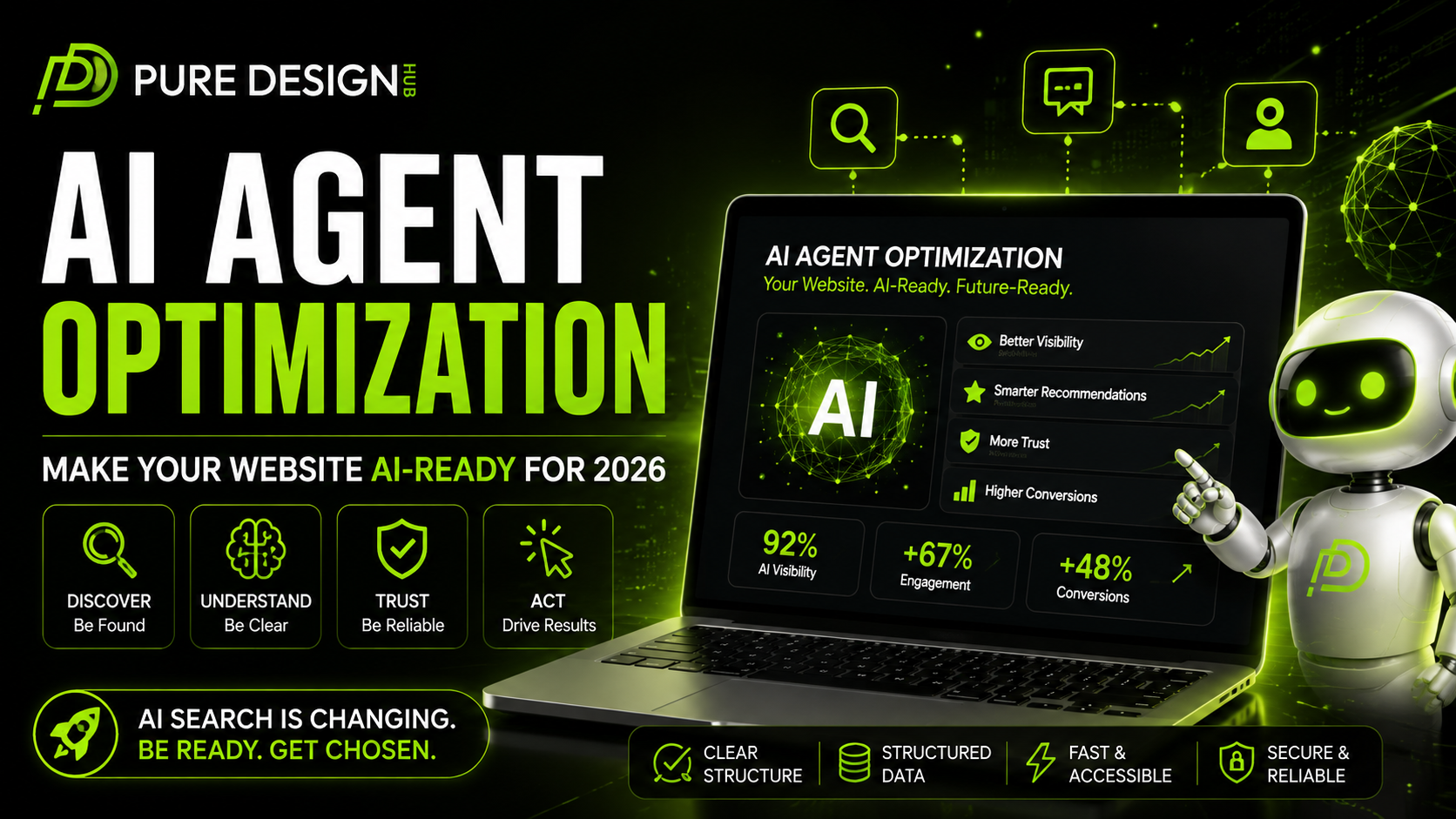
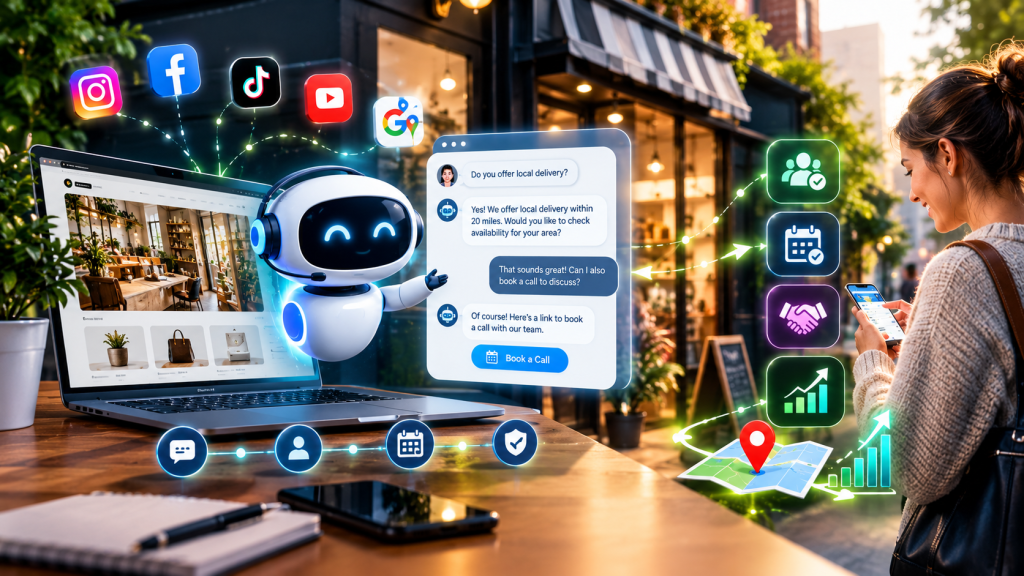

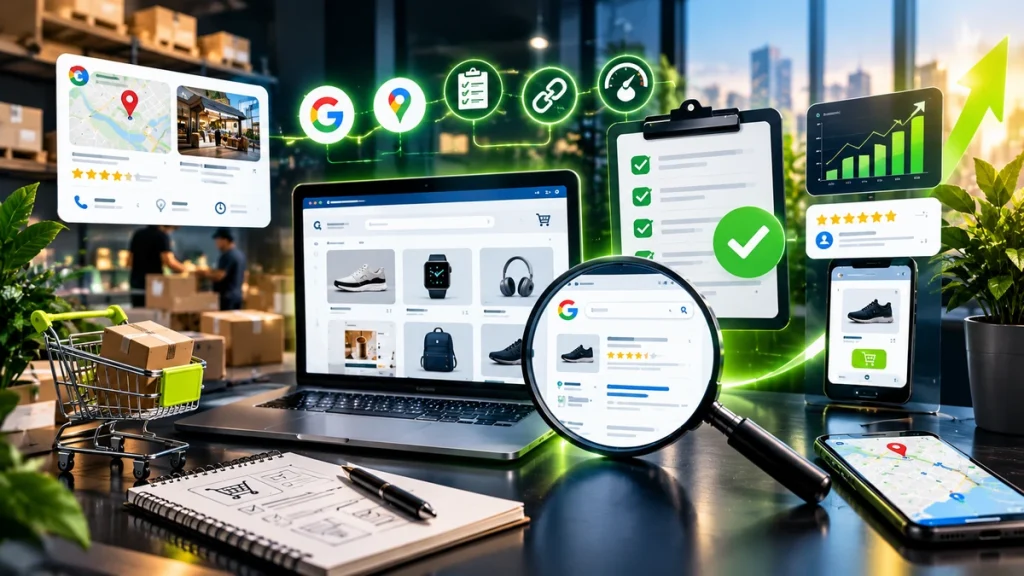
AI agents are changing how people search, compare businesses, and make decisions online. Instead of searching Google, opening several websites, and comparing information themselves, users can increasingly ask an AI system to research options and help complete a task.
That creates a new opportunity for businesses: AI agent optimization.
AI agent optimization means making your website easy for AI systems to discover, understand, evaluate, and use. It goes beyond traditional SEO because an AI agent may not simply read your page. It may need to understand your services, compare your business with competitors, find important information, or interact with your website.
This does not replace SEO. It builds on the technical, content, and user-experience foundations that already make a website useful to search engines and people.
What Is AI Agent Optimization?
AI agent optimization is the process of preparing a website so AI agents can accurately discover, understand, trust, and interact with its information.
Traditional SEO focuses heavily on helping pages appear in search results. AI search optimization helps content become useful in AI-generated answers. Agent optimization takes the idea further by considering what happens when an AI system acts on behalf of a user.
For example, someone might ask an AI agent:
“Find a web development company in the USA that works with small businesses and offers ecommerce development.”
The agent needs clear information about each business before it can make a useful recommendation.
If your website clearly explains your services, location, pricing approach, expertise, contact options, and business information, the agent has less ambiguity to work through.
Why Is AI Agent Optimization Becoming Important?
AI agents are moving from simple question answering toward research, comparison, shopping, and task-based interactions. Recent industry research has identified agent optimization as an emerging search trend, with related demand growing quickly during 2026.
Google and other technology companies are also developing more agentic experiences. The broader shift is from users finding information themselves toward AI systems helping users make decisions and complete tasks.
For businesses, this means your website may increasingly have two audiences:
- Human visitors
- AI systems acting on behalf of those visitors
The goal is not to create a separate website for AI. It is to make your existing website clearer, more accessible, and easier to understand.
AI Agent Optimization vs SEO vs AI Overview Optimization
These concepts are related, but they are not identical.
AI is also changing how businesses build websites. Our comparison of AI website builders and web developers explains where each approach makes sense.
| Area | Traditional SEO | AI Overview Optimization | AI Agent Optimization |
|---|---|---|---|
| Main goal | Improve search visibility | Increase usefulness and visibility in AI-generated search answers | Help AI agents discover, evaluate, and act on website information |
| Primary audience | Search engines and people | AI search systems and people | AI agents acting for users |
| Important elements | Keywords, content, links, technical SEO | Helpful content, entities, authority, structure | Machine-readable information, clear actions, structure, trust and accessibility |
| Example query | “web development company USA” | “best web development company for a small business” | “Find a web developer in the USA and compare their services” |
| Business outcome | Website traffic | AI visibility and qualified visits | Recommendations, comparisons, referrals, and potential actions |
Your existing AI Overview Optimization Guide can therefore remain focused on AI-generated search results. This new topic should focus on the next layer: how AI agents understand and interact with websites.
7 Ways to Optimize Your Website for AI Agents
1. Make Your Business Information Clear
AI systems need reliable information.
Clearly explain:
- Who your company is
- What services you provide
- Where you operate
- Who you serve
- What makes your business different
- How customers can contact you
Avoid vague claims such as “we provide innovative solutions.” Explain exactly what you do.
For example, instead of saying:
“We create digital experiences.”
Say:
“We provide website design, web development, SEO, and ecommerce development for businesses in the USA.”
Specific information is easier for both people and machines to interpret.
2. Build a Clear Website Structure
A complicated website can make information harder to understand.
Use descriptive navigation, logical categories, meaningful headings, and relevant internal links.
Your important pages should be easy to discover.
A simple structure might look like:
Home → Services → Web Development → Ecommerce Development → Contact
This also supports traditional SEO because search engines need to crawl and understand your website efficiently.
3. Use Structured Data Where It Makes Sense
Structured data helps search engines understand entities and page information.
Depending on the page, relevant Schema.org types may include:
- Organization
- LocalBusiness
- Service
- Product
- Article
- BreadcrumbList
- FAQPage
Do not add schema simply to add more code. The structured data should accurately represent information visible on the page.
4. Make Important Actions Easy to Understand
AI agents may need to identify what a website allows users to do.
Make actions obvious.
Examples include:
- Contact us
- Request a quote
- Book a consultation
- Add to cart
- Check availability
- Submit an enquiry
- Download a resource
Clear buttons and forms help human visitors too.
5. Improve Technical SEO and Accessibility
AI agent optimization does not mean ignoring technical SEO.
Your website should remain:
- Crawlable
- Indexable
- Mobile-friendly
- Fast
- Accessible
- Secure
- Well structured
Google’s guidance for AI search continues to emphasize the fundamentals: useful original content, good page experience, and making content accessible to crawling and indexing systems.Before optimizing for AI agents, make sure your site has a strong technical foundation. Our technical SEO checklist covers the core areas you should review.
6. Write Content That Answers Real Questions
AI systems often need concise, factual information to answer specific questions.
Instead of writing around a keyword, answer the user’s question directly.
For example:
What does ecommerce web development include?
Start with a short answer, then explain the details.
This structure works well for traditional search, featured results, AI-generated answers, and human readers.
Start with the question behind the search rather than simply inserting keywords. Understanding search intent helps you create content that answers what users actually need.
7. Keep Business Information Consistent
Your company name, services, location, contact information, and other important business details should be consistent across your website and reputable external sources.
Inconsistent information can create uncertainty.
For businesses competing for AI-driven recommendations, trust and clarity matter because an AI system needs enough reliable information to determine whether a business matches a user’s request.
AI Agent Optimization Is Not About Tricks
There is a common mistake in emerging AI SEO discussions: treating agent optimization as another way to manipulate search systems.
That is the wrong approach.
Do not create hidden text, fake information, misleading structured data, or content designed only for bots.
The better strategy is simple:
Make your website easier for everyone to understand.
A clear website helps customers. It helps search engines. It can also help AI systems interpret your business more accurately.
What Does an AI-Agent-Ready Website Look Like?
An AI-agent-ready website should clearly communicate four things:
What you offer.
Your products and services should be easy to identify.
Who you serve.
Explain your target customers, industries, locations, or markets.
Why users should trust you.
Show evidence such as experience, case studies, reviews, credentials, and clear business information.
What users can do next.
Make important actions easy to find and understand.
This is especially important for ecommerce and service websites, where an AI agent may need to compare products, services, prices, requirements, or other decision factors.
Recent research on agent-ready websites similarly emphasizes machine readability, actionability, and reliable decision information.
A clear, accessible interface is important for both users and modern AI-driven experiences. Our web design services focus on creating websites that are easy to navigate and built around business goals.
What Should Businesses Do Now?
You do not need to rebuild your entire website because AI agents are becoming more important.
Start with an audit.
Check whether:
- Your main services are clearly explained
- Your important pages are crawlable
- Your navigation is logical
- Your structured data is accurate
- Your business information is consistent
- Your pages answer common customer questions
- Your forms and calls to action are easy to understand
- Your website works well on mobile devices
- Your pages load quickly
- Your content provides original value
Then prioritize the pages that generate the most business value.
For a web development company, this could mean starting with service pages, portfolio pages, industry pages, and contact or enquiry pages.
If your website receives visitors but those visitors rarely contact you, review the conversion problems covered in our guide to websites that aren’t generating leads.
The Future of Search Is Becoming More Agentic
Search is moving beyond a simple process of entering a keyword, scanning results, and clicking a link.
Users can increasingly delegate research and decisions to AI systems. Industry research describes this as a shift toward agent-mediated search and decision-making.
That does not mean traditional Google SEO is disappearing.
It means websites need to become better at communicating information in a world where both humans and AI systems may discover and evaluate them.
AI agent optimization is still an emerging field, but the direction is clear: websites need to be understandable, trustworthy, technically accessible, and easy to act on.
Businesses that start improving those foundations now can be better prepared as agentic search and AI-assisted browsing continue to develop.
Frequently Asked Questions
AI agent optimization is the process of making a website easier for AI agents to discover, understand, evaluate, and interact with when helping users complete tasks.
SEO focuses on improving visibility and usability in search engines. AI agent optimization adds another consideration: whether AI systems can accurately understand your business and use its information when making recommendations or completing tasks.
AI agents may access websites when their systems and permissions allow web browsing or other forms of retrieval. Your website still needs to meet normal technical requirements for crawling, indexing, accessibility, and performance.
Start with clear business information, logical site architecture, useful content, accurate structured data, accessible navigation, clear actions, strong technical SEO, and consistent information across your website.
No. AI agent optimization should complement SEO rather than replace it. Strong technical SEO, helpful content, crawlability, page experience, and clear website structure remain important foundations for modern search.