

Artificial intelligence is changing the way businesses create software. From startups building their first product to companies improving internal systems, AI-powered development is becoming a major part of modern technology.
One of the newest trends in this space is vibe coding.
Vibe coding allows users to create software by explaining their ideas in simple language while AI tools generate, improve, and modify code. Instead of writing every line manually, developers and business owners can communicate their goals and use AI to speed up the development process.
But is vibe coding the future of software development? Can businesses rely on AI-generated applications? What are the benefits, risks, and limitations?
This guide explains what vibe coding is, how it works, its cost, benefits, risks, tools, and how it compares with professional software development.
What Is Vibe Coding?
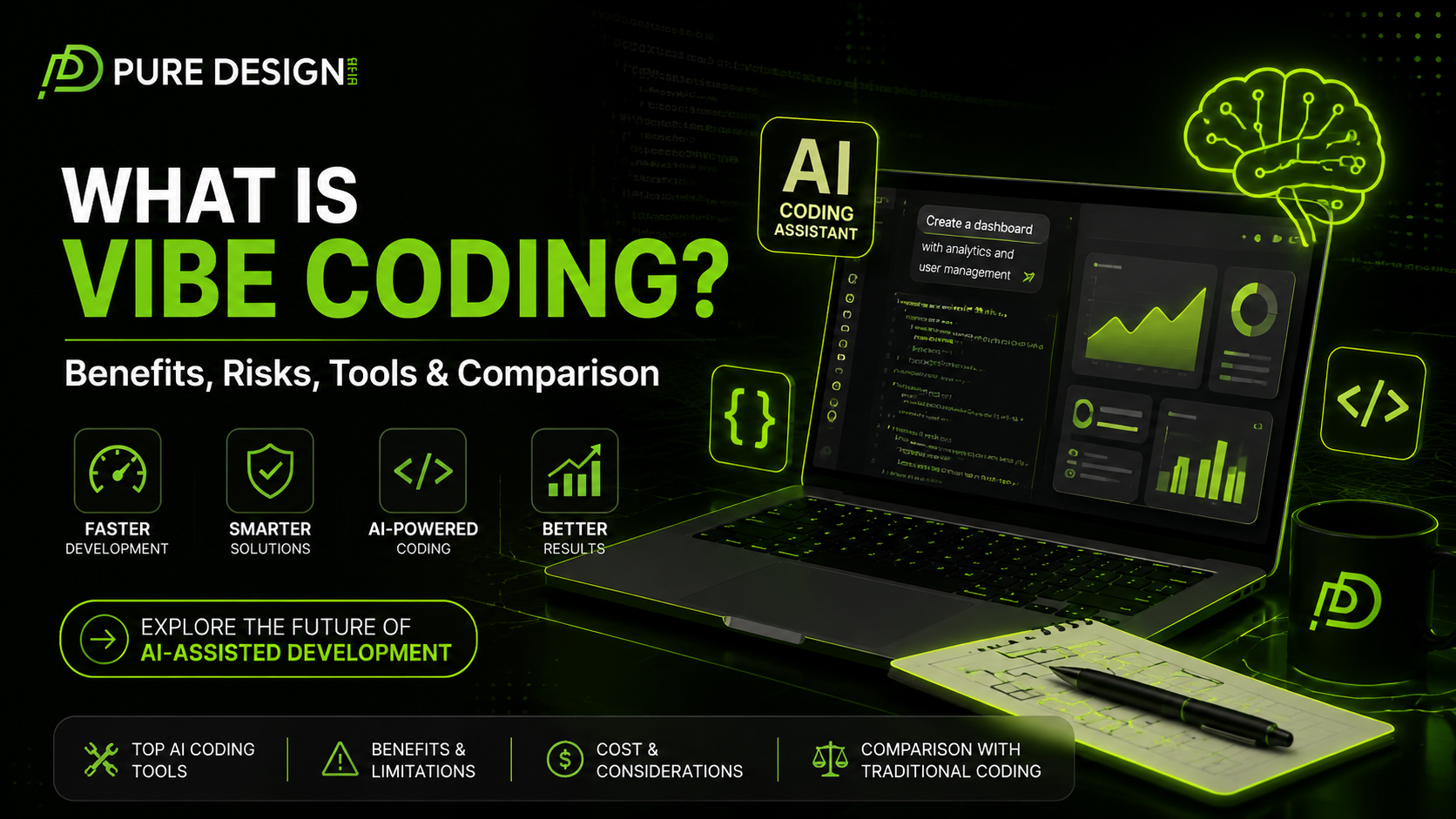
Vibe coding is an AI-assisted software development approach where users describe what they want to build using natural language, and artificial intelligence tools help create the required code.
In traditional development, a programmer writes code line by line using programming languages such as JavaScript, Python, or PHP.
With vibe coding, users can give instructions like:
“Create a customer dashboard with login, analytics, and payment features.”
The AI tool can then generate the initial structure, suggest improvements, fix errors, and help refine the application.
Vibe coding does not remove developers from the process. Instead, it changes their role. Developers spend less time on repetitive coding tasks and more time focusing on planning, user experience, security, and product quality.
For businesses, this creates a faster way to test ideas and build digital products.
How Does Vibe Coding Work?
The vibe coding process usually follows a simple workflow.
1. Idea and Requirement
The user explains the product idea, features, and goals.
Example:
“A business needs an online booking platform with customer accounts.”
2. AI Code Generation
AI coding tools analyze the instructions and generate:
- Website components
- Application features
- Database structures
- Basic designs
- Code suggestions
3. Testing and Improvements
The user reviews the result and provides additional instructions.
For example:
- Improve the design
- Add new features
- Fix errors
- Optimize performance
4. Deployment
After testing and improvements, the application can be launched.
This workflow makes vibe coding useful for prototypes, MVPs, and early-stage product development.
Why Is Vibe Coding Becoming Popular?
The popularity of vibe coding comes from one major advantage:
It reduces the gap between an idea and a working product.
Previously, businesses needed technical teams even to test simple ideas.
Today, AI tools allow founders, designers, and entrepreneurs to create early versions of digital products faster.
Companies are using AI-assisted development for:
- Website prototypes
- Internal business tools
- Mobile app concepts
- SaaS ideas
- Automation solutions
However, creating a prototype is different from building a secure and scalable business application.
Benefits of Vibe Coding
1. Faster Development Process
The biggest benefit of vibe coding is speed.
AI tools can generate code, layouts, and basic features within minutes. This helps businesses move quickly from an idea to a working prototype.
For startups, this means faster market testing.
2. Easier Software Creation
Vibe coding makes software development more accessible.
People without advanced programming knowledge can experiment with ideas and understand what is possible.
It is especially useful for:
- Entrepreneurs
- Product managers
- Designers
- Startup founders
3. Faster MVP Development
Many startups fail because they spend too much time and money building products before testing demand.
Vibe coding helps companies create a minimum viable product (MVP) faster.
Examples:
- Landing pages
- Customer portals
- Simple SaaS platforms
- Internal dashboards
Businesses can test customer feedback before investing in a complete product.
4. Improved Developer Productivity
Professional developers can also benefit from vibe coding.
AI tools can help with:
- Writing repetitive code
- Debugging issues
- Creating documentation
- Generating ideas
This allows developers to focus on complex engineering decisions.
How Much Does Vibe Coding Cost?
The cost of vibe coding depends on the tools, project complexity, and level of expertise required.
Basic AI Coding Tools
Many AI coding platforms work on subscription models.
Typical costs include:
- Free plans with limited features
- Monthly AI coding subscriptions
- Premium developer tools
Business Project Costs
While AI tools reduce initial development effort, businesses still need to consider:
- Planning
- Design
- Testing
- Security
- Deployment
- Maintenance
A simple prototype may require minimal investment, but a professional business application requires proper software development processes.
For companies building customer-facing platforms, combining AI tools with professional custom software development services provides better long-term results.
Risks and Limitations of Vibe Coding
Although vibe coding is powerful, it is not a complete replacement for professional development.
1. Security Risks
AI-generated code may contain security weaknesses.
Potential problems include:
- Poor authentication
- Data protection issues
- Vulnerable code
- Incorrect configurations
Businesses handling customer information should always perform security reviews.
2. Code Quality Problems
AI can create code that works but is difficult to maintain.
Without proper architecture, companies may experience:
- Technical debt
- Slow performance
- Difficult updates
- Future development problems
3. Limited Scalability
A prototype can be created quickly, but large applications require:
- Database planning
- Cloud infrastructure
- Performance optimization
- Security standards
Professional engineering becomes important when a product grows.
4. Lack of Business Understanding
AI tools generate solutions based on instructions.
They do not fully understand:
- Business goals
- Customer behavior
- Long-term strategy
Human expertise remains essential.
Popular Vibe Coding Tools
Several AI tools support vibe coding workflows:
| Tool | Main Purpose |
| Cursor | AI-powered code editor |
| GitHub Copilot | AI coding assistant |
| ChatGPT | Coding support and problem solving |
| Claude | AI development assistance |
| Replit AI | Browser-based development |
| Lovable | AI application building |
These tools help developers and businesses build faster, but successful products still require proper planning and expertise.
Real-World Examples of Vibe Coding
Businesses can use vibe coding in many practical ways.
Startup MVP Development
A startup can create an early product version to test market demand.
Business Automation Tools
Companies can build internal solutions for:
- Reporting
- Customer management
- Workflow automation
Website Prototypes
Businesses can quickly test:
- Landing pages
- Product ideas
- User experiences
AI-Powered Applications
Companies can explore:
- Chatbots
- AI assistants
- Smart recommendation systems
Vibe Coding vs Professional Software Development
| Factor | Vibe Coding | Professional Software Development |
| Development Speed | Faster for prototypes | Structured and reliable |
| Initial Cost | Lower for experiments | Higher but more controlled |
| Customization | Limited by AI output | Fully customized solutions |
| Security | Requires expert review | Professional security practices |
| Scalability | Limited for complex systems | Built for business growth |
| Maintenance | Can become challenging | Easier long-term support |
| Best Use | Ideas, prototypes, MVPs | Production applications |
Who Should Use Vibe Coding?
Startups
Vibe coding is useful for testing ideas quickly before investing in full development.
Small Businesses
Companies can use AI tools for prototypes and simple automation solutions.
Developers
Professional developers can use AI to improve productivity.
Growing Companies
Businesses building important customer platforms should combine AI tools with experienced development teams.
Can Vibe Coding Replace Software Developers?
No.
Vibe coding changes how software is created, but it does not eliminate the need for professional developers.
AI can generate code, but experts are still needed for:
- Software architecture
- Security
- User experience
- Performance optimization
- Scalable systems
- Long-term maintenance
The future of development is not AI replacing developers. It is developers using AI to build better products faster.
How PureDesignHub Helps Businesses Build AI-Powered Solutions
AI has created new opportunities for businesses, but successful digital products require more than generated code.
PureDesignHub helps companies transform ideas into reliable digital solutions through:
- AI-powered software solutions
- Custom software development
- Web application development
- MVP development services
- User-focused digital experiences
Whether you need to validate an idea or build a production-ready application, combining AI technology with professional expertise creates better results.
Ready to turn your idea into a scalable digital product? Contact PureDesignHub today and discuss your project with our team.
Frequently Asked Questions
Vibe coding is an AI-assisted development method where users describe software ideas in natural language and AI tools generate or improve code based on those instructions.
No. Vibe coding helps developers work faster, but professional developers are still required for security, architecture, scalability, and complex applications.
The main benefits include faster prototyping, easier software creation, reduced development time, and improved productivity.
Vibe coding is useful for prototypes and MVPs. For secure, scalable business applications, companies should combine AI tools with professional software development.
Vibe coding uses AI tools to generate software through natural language instructions, while traditional coding relies on developers manually creating and managing code.