
Choosing an ecommerce platform can shape how your business sells online. The right setup should be easy to use, simple to manage, and ready to grow with your needs.
Two common options are headless commerce and traditional ecommerce. Both let you sell products online, but they work in different ways.
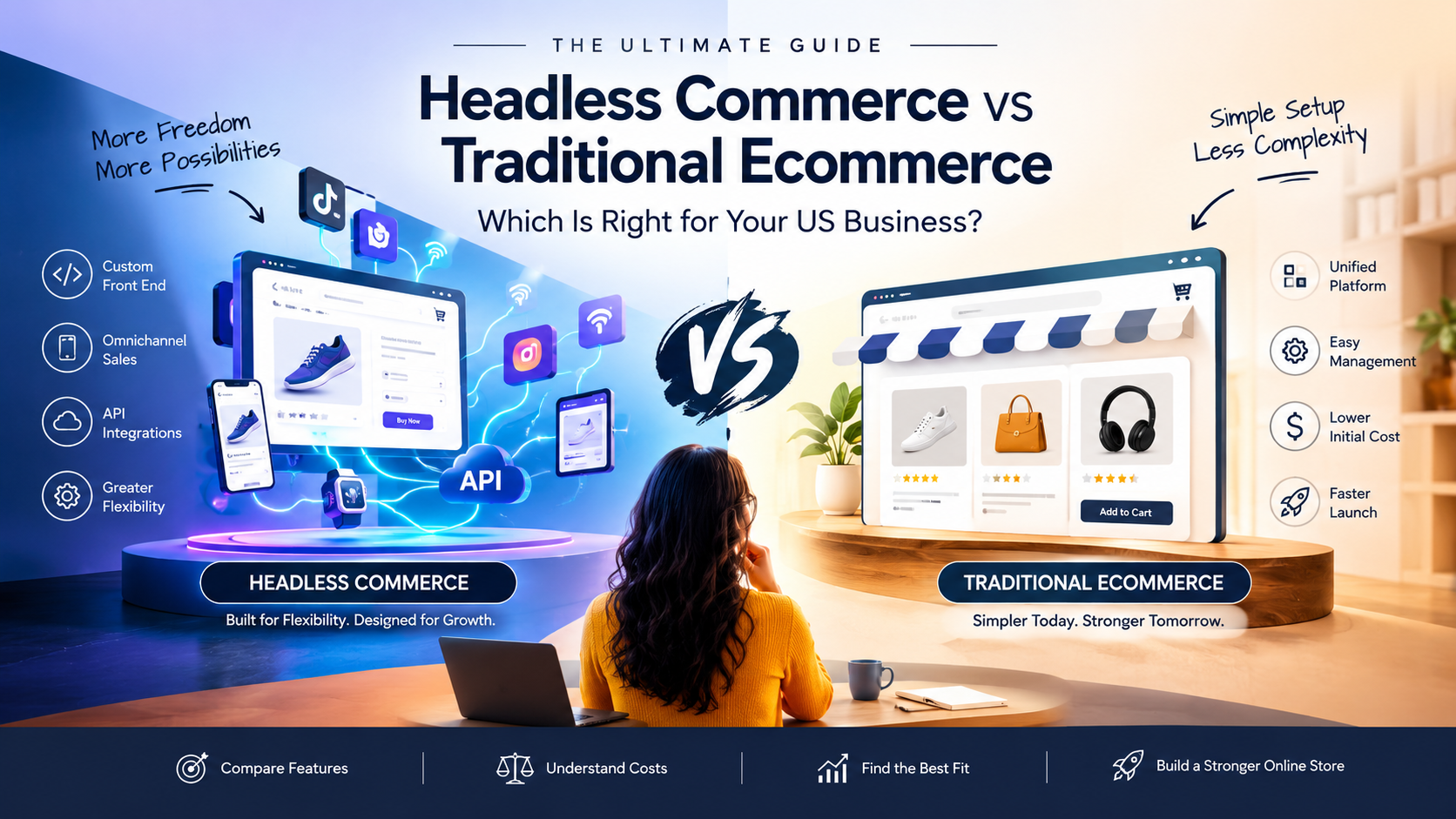
Headless commerce gives you more control over the storefront. Traditional ecommerce often offers a simpler way to launch and manage a store.
For small and growing US businesses, the best choice depends on your budget, team, sales goals, and plans for growth.
What Is Headless Commerce?
Headless commerce separates the part shoppers see from the system that runs the store.
The front end is your website or app. The back end manages products, prices, stock, carts, and orders. APIs connect the two parts.
This setup lets developers build a custom storefront while keeping core commerce tools in place. For example, a brand might use one system to manage products and a custom website to show them.
According to Shopify’s headless commerce guide, this model can support shopping across websites, mobile apps, and other customer touchpoints.
What Is Traditional Ecommerce?
Traditional ecommerce keeps the storefront and commerce system within one connected platform.
You may use a ready-made theme, add products, set up payments, and manage orders from one dashboard. Many platforms also offer apps and built-in tools for common store tasks.
This can make setup easier for businesses with simple needs. You may not need a custom front end or a team of developers to launch.
Traditional ecommerce is not limited to basic stores. Many platforms offer strong design options, useful integrations, and tools that support business growth.
Headless Commerce vs Traditional Ecommerce
Here are the main differences.
| Feature | Headless commerce | Traditional ecommerce |
|---|---|---|
| Storefront | Built as a separate front end | Usually tied to the platform |
| Design control | High flexibility | Depends on themes and tools |
| Setup | Often more complex | Often simpler |
| Initial cost | Usually higher | Often lower |
| Maintenance | Needs ongoing technical support | Often easier to manage |
| Integrations | Uses APIs and custom connections | Often uses built-in apps |
| Best fit | Complex or custom needs | Simple to growing store needs |
Neither option is best for every business. The right choice depends on the work you need the store to do.
Benefits of Headless Commerce
Headless commerce can help when a standard theme cannot meet your needs.
1. More control over design
You can build a storefront around your brand and customer needs. Your team has more freedom to shape menus, product pages, and shopping flows.
2. More ways to sell
A shared commerce system can support a website, mobile app, or other shopping touchpoints. This can help brands that sell through several channels.
3. Flexible integrations
APIs can connect the storefront with tools such as a content system, customer database, or stock system.
This can be useful when your business has complex workflows.
4. Independent front-end updates
Developers can change parts of the customer experience without rebuilding the whole commerce system. The result depends on how the store is built and managed.
One key point: headless commerce does not make a site fast or successful by default. Code, hosting, images, and setup still matter.
Benefits of Traditional Ecommerce
For many small businesses, a traditional platform is the better place to start.
1. Faster setup
Themes and built-in tools can help you launch without a long custom build.
2. Lower starting costs
You may avoid the extra cost of a custom front end and specialist development work.
3. Easier store management
A single dashboard can make it easier to manage products, orders, payments, and daily tasks.
4. Less technical work
Many platforms handle core updates and provide apps for common needs. This can reduce the amount of support your team needs.
If you are still planning your budget, read our guide to ecommerce website costs before choosing a platform.
What Are the Downsides of Headless Commerce?
Headless commerce offers freedom, but that freedom comes with extra work.
Your business may need developers to build, test, update, and maintain the front end. Custom integrations can also take time and money.
You may need to plan for:
- Extra development costs
- More complex testing
- API and integration work
- Ongoing front-end support
- A clear plan for future updates
Shopify notes that a headless storefront can cost more to build and run than a theme-based store. It recommends considering headless when existing themes, apps, or sales channels cannot meet the business need.
That is why headless commerce should solve a real problem, not just follow a trend.
How Does Your Choice Affect SEO?
Both headless and traditional ecommerce can support SEO. Your platform choice alone does not guarantee higher rankings.
Your store still needs useful content, clean URLs, clear navigation, and pages that search engines can access.
Google’s ecommerce SEO guidance explains how site structure and product data can help Google discover and understand an online store.
With a headless build, pay close attention to:
- Pages that search engines can crawl
- Clear product and category URLs
- Server-side rendering or other suitable page delivery
- Product structured data
- Internal links between key pages
- Mobile usability and page speed
A traditional platform may provide some of these features through its theme or apps. A headless build gives your team more control, but it also makes your team responsible for getting the details right.
You can use our ecommerce SEO audit checklist to review the main areas that affect search visibility.
Which Option Is Right for Your Business?
Use your current needs and future plans to guide the choice.
Choose traditional ecommerce if:
- You need to launch soon.
- Your store has common shopping needs.
- Your budget is limited.
- Your team wants a simple way to manage products.
- Your current platform meets your sales goals.
Consider headless commerce if:
- You need a custom shopping experience.
- Your store must support several front ends.
- Your systems need custom API connections.
- Standard themes cannot meet key needs.
- You have a plan and budget for ongoing development.
For example, a small US clothing brand may do well with a standard store theme. A retailer with a complex catalog, custom buying steps, and several digital channels may gain more from a headless setup.
Do not switch just because another brand uses headless commerce. First, define the problem you need to solve.
What Does Headless Commerce Cost?
There is no single price for a headless store. The cost depends on the design, tech stack, integrations, hosting, and support needs.
A traditional store may have costs for its platform, theme, apps, and setup. A headless store may add front-end development, API work, testing, and more ongoing support.
Before you decide, list the full cost of building and running the store. Include future changes, not just launch costs.
Our guide to website development services in the USA explains the types of development support businesses may need. You can also review our website maintenance packages guide to plan for ongoing care.
Questions to Ask Before You Decide
Before you choose an approach, ask your team these questions:
- What does our current store fail to do?
- Can a theme or app solve the problem?
- How much can we spend on the build and future support?
- Who will maintain the store after launch?
- How will we measure success?
You should also compare platforms based on your own needs. Our Drupal vs WordPress comparison is a useful starting point for evaluating different content management systems.
Final Thoughts
Headless commerce vs traditional ecommerce is not a choice between old and new. It is a choice between different ways to build and run an online store.
Traditional ecommerce can be a smart fit when you need a simple, cost-aware setup. Headless commerce may suit a business that needs custom experiences, complex integrations, or more control across sales channels.
Start with your goals, budget, team, and customer needs. Choose the setup that solves your problems today and gives you room to grow.
Need help choosing or building your ecommerce setup? Contact Pure Design Hub to discuss your website goals and find an approach that fits your business.
Frequently Asked Questions
Headless commerce separates the storefront from the commerce system. Traditional ecommerce usually connects both through one platform.
It can be worth it when a business needs custom features or complex integrations. For a simple store, a traditional platform may cost less and be easier to manage.
Not by itself. SEO depends on factors such as crawl access, page delivery, content, links, site structure, and product data.
It often costs more to build and maintain because it needs a separate front end and technical support. The exact cost depends on the project.
Yes. Shopify supports headless storefronts through its APIs and tools such as Hydrogen. A separate front end still needs to be built and maintained.