
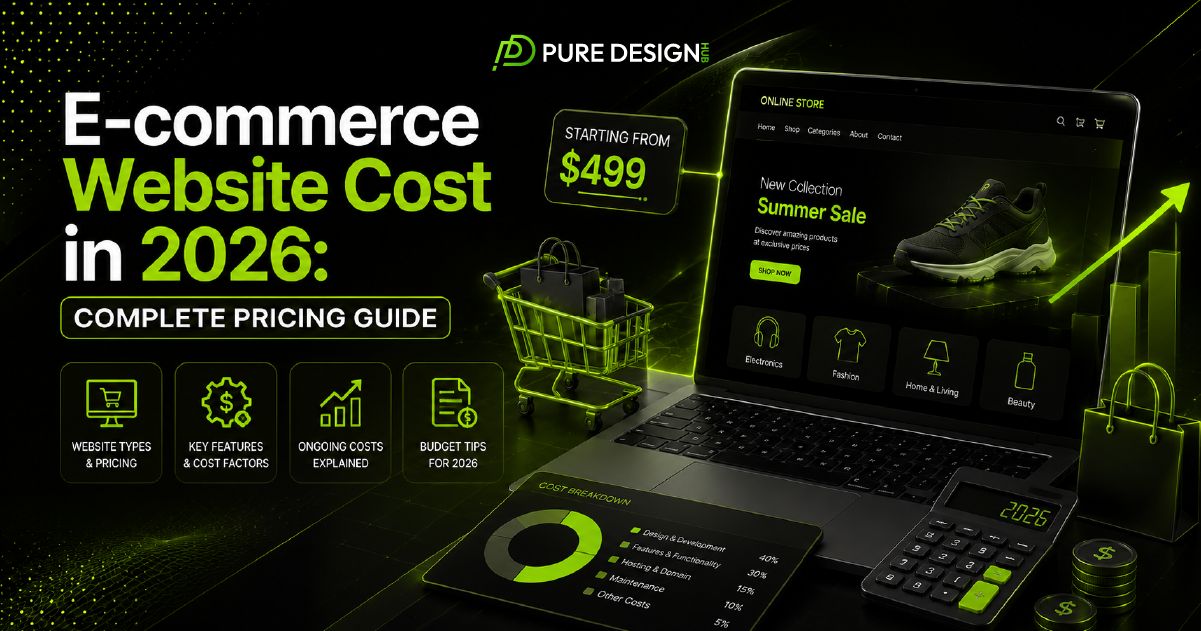

Launching an online store can create a valuable sales channel, but estimating the e-commerce website cost is not always simple. Every business has different products, customer needs, features, and growth plans.
A small store using a ready-made theme requires less work than a large website with subscriptions, advanced inventory rules, multiple currencies, or custom software connections. A trustworthy development company should therefore review the complete project before providing a quote.
This guide explains what shapes e-commerce website pricing in 2026. It will help you compare development options, plan a realistic scope, and avoid paying for features your business does not need.
U.S. online retail demand remains strong. The U.S. Census Bureau reported $326.7 billion in retail e-commerce sales during the first quarter of 2026, up 9.8% from the same period in 2025.
What Determines E-commerce Website Cost?
The cost to build an online store depends on its platform, design, product catalog, features, integrations, content, security, and ongoing support. Shopify and BigCommerce also identify functionality, customization, platform choice, and business complexity as major cost factors.
Before contacting a developer, divide your requirements into two groups: features needed at launch and features that can be added later. This keeps the scope focused and makes estimates easier to compare.
Platform and Development Approach
Your platform affects flexibility, management, scalability, and maintenance. Common options include Shopify, WooCommerce, BigCommerce, and fully custom development.
A hosted platform can simplify hosting, updates, and basic security. An open-source solution offers more control but may require separate hosting, plugins, security work, and technical support.
The right platform should support both present needs and future growth. Choosing only for a quick launch can lead to extra migration or rebuilding work later.
Template Design or Custom Design
A ready-made theme can shorten development and suit a business with a straightforward catalog. However, it may limit branding, layout choices, and specialized functions.
A custom e-commerce website requires more strategy, design, development, and testing. It gives the business greater control over navigation, product pages, mobile layouts, checkout flow, and conversion optimization.
Custom design is usually more suitable when a store has a distinct brand, complex customer journey, unusual products, or functions that standard themes cannot support.
Product Catalog and Content
Product volume can greatly affect the e-commerce website development cost. Each item may require a title, description, images, price, category, variants, stock information, shipping details, and SEO fields.
A small catalog is easier to organize than one containing thousands of products, bundles, sizes, colors, or personalized options. Larger stores may also need bulk imports, advanced filters, search tools, and automated inventory updates.
Content preparation matters as well. Missing product copy, images, banners, videos, policy pages, or category information can delay the project.
Features and Third-Party Integrations
Most stores need product pages, a shopping cart, checkout, a payment gateway, order emails, shipping settings, and inventory management.
More advanced requirements may include subscriptions, wholesale pricing, loyalty programs, customer accounts, product customization, multilingual content, CRM connections, accounting tools, or warehouse software.
Every integration must be configured and tested. Custom connections can require API development, increasing the technical work involved.
E-commerce Development Options Compared
| Development option | Best suited for | Main benefits | Main limitations | Project scope |
| DIY website builder | Testing a basic business idea | Quick setup and simple controls | Limited flexibility and growth options | Low |
| Theme-based store | Small or growing retailers | Faster launch and familiar layouts | Design and feature restrictions | Low to moderate |
| Customized platform store | Established online businesses | Better branding and integrations | Requires professional development | Moderate to high |
| Fully custom store | Complex business models | Maximum control and scalability | Longer planning and testing | High |
This comparison shows why one fixed e-commerce website cost cannot represent every project. Two stores may sell similar products but require completely different customer journeys, integrations, and management systems.
Mobile Performance, SEO, and Security
Responsive design is a basic requirement for online stores. Customers should be able to browse products, apply filters, use the shopping cart, and complete checkout smoothly on phones, tablets, and desktop computers.
Performance work may involve image compression, clean code, reliable hosting, caching, and careful app selection. A faster store creates a smoother shopping experience and can support better conversion rates.
SEO setup may include clean URLs, page titles, meta descriptions, internal links, structured data, image alt text, category optimization, and redirect planning.
Testing should cover payments, discount codes, taxes, shipping, stock changes, forms, browser compatibility, backups, and user permissions. Skipping these steps can cause poor visibility, abandoned carts, technical errors, or expensive fixes after launch.
Ongoing Website Maintenance
An online store is not finished when it goes live. Products change, software needs updates, integrations can fail, and customer expectations continue to develop.
Website maintenance may include backups, security checks, performance reviews, bug fixes, app updates, product changes, and conversion improvements.
Businesses should discuss post-launch support during the planning stage instead of treating it as an unexpected future expense. Regular support can help keep the website secure, functional, and ready for growth.
How to Request an Accurate Estimate
Prepare a project brief covering your business goals, target audience, product count, payment methods, shipping regions, preferred platform, required integrations, and must-have features.
Share examples of online stores you like and explain what works for you. You may like their navigation, product filtering, design style, mobile experience, or checkout process.
A professional agency should review the full scope before estimating the work. Compare providers based on their relevant experience, communication, testing process, support, and ability to scale your store not only on the lowest offer.
Frequently Asked Questions
The cost varies according to the platform, catalog size, design, functionality, integrations, content, testing, and support. A developer must review these requirements before providing an accurate project estimate.
The timeline depends on the complexity of the project, product volume, content readiness, integrations, revisions, and testing. A theme-based store may launch sooner than a fully custom online store.
Shopify, WooCommerce, BigCommerce, and custom platforms serve different business needs. The best option depends on your products, internal skills, required features, growth plans, and preferred level of control.
A template works well for a simple store that needs a faster launch. Custom development is more suitable for unique branding, specialized features, complex integrations, or a customer journey designed around specific business requirements.
A strong online store should include clear navigation, helpful product pages, search and filtering, secure checkout, payment options, shipping information, responsive design, inventory management, analytics, SEO foundations, policies, and technical support.
Plan an Online Store That Can Grow
There is no universal e-commerce website pricing formula because each store has different commercial and technical needs. A clear scope helps control development time, remove unnecessary features, and make estimates easier to compare.
The goal should not be to build the largest possible website. It should be to build a reliable store that meets customer needs, supports daily operations, and can expand as the business grows.
Pure Design Hub can plan and develop an online store around your products, customers, brand, and long-term goals. Start with a detailed consultation to identify the right platform, features, integrations, and development approach.
One Response